
Professional Chinese Clothing Customization & Wholesaler
 7×24H: +8619948039507
Professional Chinese Clothing Customization & Wholesaler
7×24H: +8619948039507 Author:HAIYUAN TIME:2025-12-08Read:
If you're looking for manufacturers (rather than distributors) of workwear, you're moving up the supply chain. This involves sourcing directly from factories, typically for larger volumes, custom designs, or developing your own brand. Here's what you need to know.
Manufacturer: The factory that actually makes the garments. Minimum Order Quantities (MOQs) are high (500-5,000+ per style/color), but costs per unit are lowest. You can customize everything: fabric, fit, features, labels, and packaging.
Distributor/Wholesaler: The middleman that buys from multiple manufacturers and sells to smaller businesses. MOQs are low, but you're choosing from their existing catalogs with limited customization (usually just adding your logo).
Best for: High volume (10,000+ units annually), lowest cost, established brands with import logistics.
Primary Hubs:
China: Dominant in volume, variety, and integrated supply chains (fabric to finish). Strong in technical workwear and high-visibility gear.
Pakistan & Bangladesh: Specialists in woven cotton garments (work shirts, trousers), denim, and heavy-duty fabrics. Often offer competitive pricing.
Vietnam & Cambodia: Growing in popularity for quality and compliance, sometimes with better trade terms to certain markets.
How to Find:
B2B Platforms: Alibaba.com, Made-in-China.com, Global Sources. Use filters for "Assessed Supplier," "Trade Assurance."
Trade Shows: Canton Fair (China), Apparel Sourcing Show.
Sourcing Agents: Local experts who find/audit factories, manage quality control, and handle logistics.
Best for: Lower minimums (100-1,000 units), faster turnaround, "Made in USA/EU" branding, stricter compliance, easier communication.
Characteristics: Higher labor costs, but reduced shipping time/cost, strong IP protection, and agility for smaller runs.
How to Find:
Industry Associations: Search "industrial apparel manufacturers association [your country]."
Google Search: "Made in USA workwear manufacturer," "contract manufacturing workwear."
Trade Shows: (US) MAGIC, The Workwear Show, OR Show (for outdoor-inspired workwear).
Vertical: Controls most steps in-house (spinning yarn, knitting fabric, cutting, sewing, finishing). Better for quality control and complex customizations.
Horizontal: Specializes in one step (e.g., only sewing). Requires you to coordinate fabric and components from other suppliers. More common and can be very efficient.
Product Type: Hi-vis safetywear, flame-resistant (FR) coveralls, chef coats, utility pants, medical scrubs, corporate uniforms?
Fabric & Compliance: Must meet specific standards (ANSI/ISEA, CE EN ISO 20471, NFPA 2112, OSHA). The manufacturer must understand and provide test certificates.
Volume: Realistic annual forecast? This is the first question a factory will ask.
Customization Level: Just a label? Custom fabric development? Unique patterning?
Samples are Non-Negotiable: Pay for production samples (prototypes) to assess quality.
Audit Reports: Ask for recent Social Compliance (SMETA, BSCI) and Quality Audits. Consider hiring a third-party inspection firm (e.g., SGS, Bureau Veritas, QIMA) for pre-shipment checks.
Certifications: Relevant to your market (e.g., ISO 9001 for quality management).
Communication: Can they communicate clearly in your language? Is their response time professional?
References: Ask for contact info of current clients in similar markets.
"What is your minimum order quantity (MOQ) per style and per color?"
"What is your lead time from confirmed order to shipment?"
"Can you source certified fabrics (FR, hi-vis) and provide component traceability?"
"What are your payment terms?" (Typical: 30% deposit, 70% before shipment).
"Who handles logistics and export documentation?"
Note: Most major brands own their designs but outsource manufacturing.
Carhartt: Mixture of owned factories and contracted manufacturers globally.
Dickies (VF Corporation): Primarily uses contracted manufacturers worldwide.
3M (Scottish-based, not the conglomerate): Specialized safetywear manufacturer.
Snickers Workwear (Hultafors Group): European manufacturing.
Red Kap, Bulwark (FR): Part of large conglomerates using global supply chains.
Understanding these brands' quality can help you set benchmarks for your manufacturer.
Prepare Tech Packs: Detailed documents with sketches, measurements (spec sheet), fabric details, label/logo placement, and packaging instructions. This is essential.
Identify & Shortlist: Use platforms and trade shows to find 5-10 potential manufacturers.
Initial Contact & RFQ: Send your tech pack and request a quotation. Gauge their responsiveness and questions.
Evaluate Quotes: Compare on cost, MOQ, lead time, terms, and feel from interactions.
Order Samples: Pay for 2-3 production samples from your top candidates. Test them rigorously.
Negotiate & Audit: Finalize terms. For large orders, conduct a factory audit (in-person or via agent).
Start with a Pilot Order: Place your first, smallest possible order to test the entire production and shipping process before committing to large volume.
Online Sourcing: Alibaba.com (filter for "Verified Supplier" with "Trade Assurance"), Jinker (for textile-specific sourcing).
Sourcing Agents: Companies like ImportYeti, Sourcing Playbook, or independent agents found through industry networks.
Trade Shows: Première Vision (fabrics), ISPO (sport/outdoor which crosses over), A+A (world's leading safety trade fair in Germany).
SEAMS Association: Network of US sewn products manufacturers.
Made in USA Brand Directory.
Thomasnet: Industrial sourcing platform for US manufacturers.
For Startups / Low Volume (<500 units): Stick with domestic wholesalers/distributors (like those in the previous guide: S&S, SanMar) or consider USA-based manufacturers with lower MOQs.
For Established Brands / High Volume: Pursue overseas manufacturers for cost savings. Always use a sourcing agent or conduct rigorous due diligence if you lack experience.
For Technical/Safety-Critical Workwear (FR, Hi-Vis): Prioritize manufacturers with proven expertise and certifications in those specific areas. Do not compromise on compliance.
Final Tip: The relationship with your manufacturer is a partnership. Clear communication, realistic expectations, and a professional approach are as important as finding the lowest price. Start with samples, always.
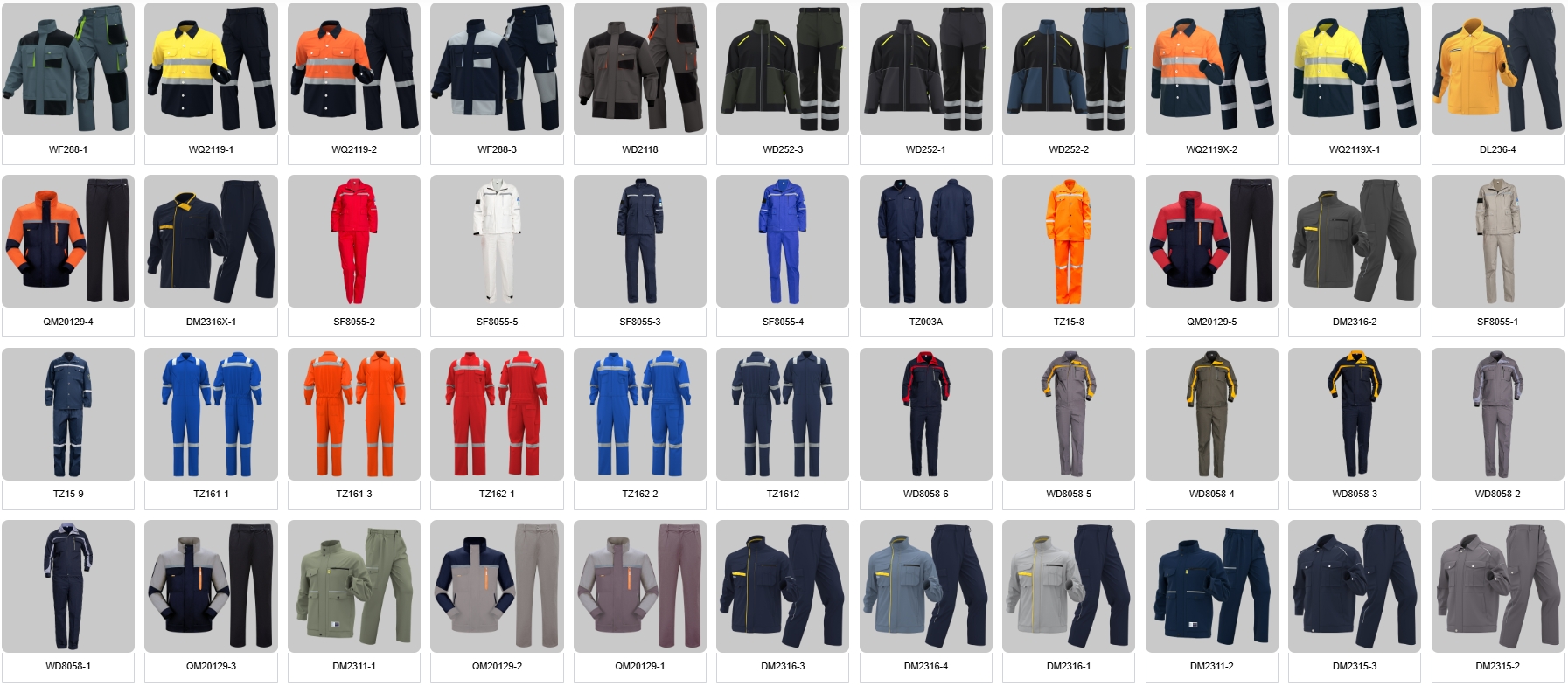
As a leading manufacturer of workwear and protective equipment in China. Our company can provide customers with different types of Workwear. You can choose styles directly from our website. In addition, if you have customized style design drawings, we can provide OEM service for you.
Shijiazhuang Haiyuan Labor Protection Products Co., Ltd
contacts:Mr. Zhang
Telephone:+8619948039507
E-mail:workwear@haiyuanworkwear.com
Address:1502, Block A, Tianzi Jiali Business Building, Dajing Street, Qiaoxi District,
Shijiazhuang City, Hebei Province
XML:XML

Back to Top
+8619948039507